Interview with Oliver
From German-Dutch Studies to Waste Management: Oliver’s Internship Experience in Bali
4-minute read
What can a student of German-Dutch Studies contribute to a waste management company in Bali? Quite a lot, as Oliver Wasinski discovered during his 12-week internship in Indonesia.
For university students pursuing interdisciplinary or specialized degrees, finding an international internship that connects academic knowledge with practical professional experience can be challenging. Not every degree leads directly to a clearly defined industry, and not every internship needs to replicate what students study in the classroom.
Oliver's experience illustrates how communication, intercultural understanding, business development, and adaptability can become valuable professional skills in an industry that initially appears unrelated to a student's academic specialization.
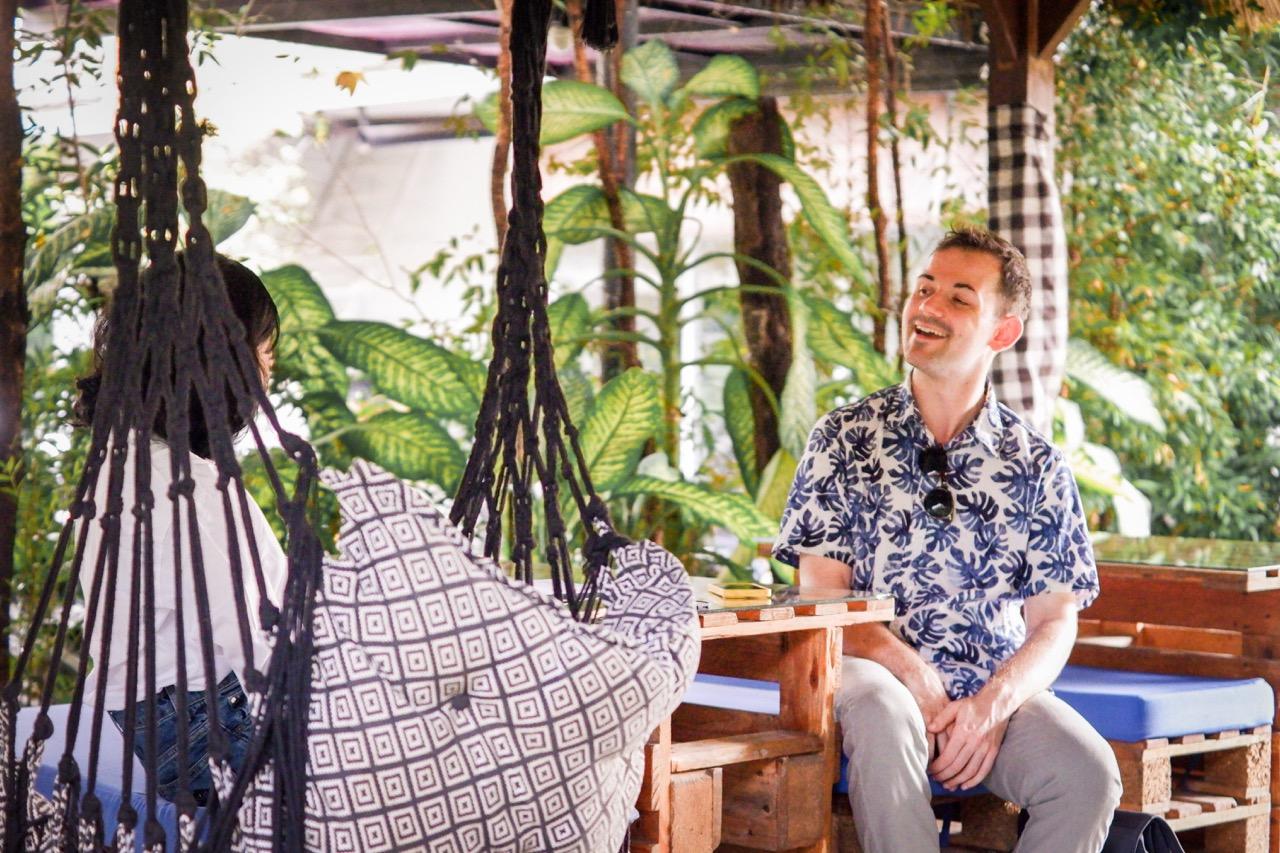
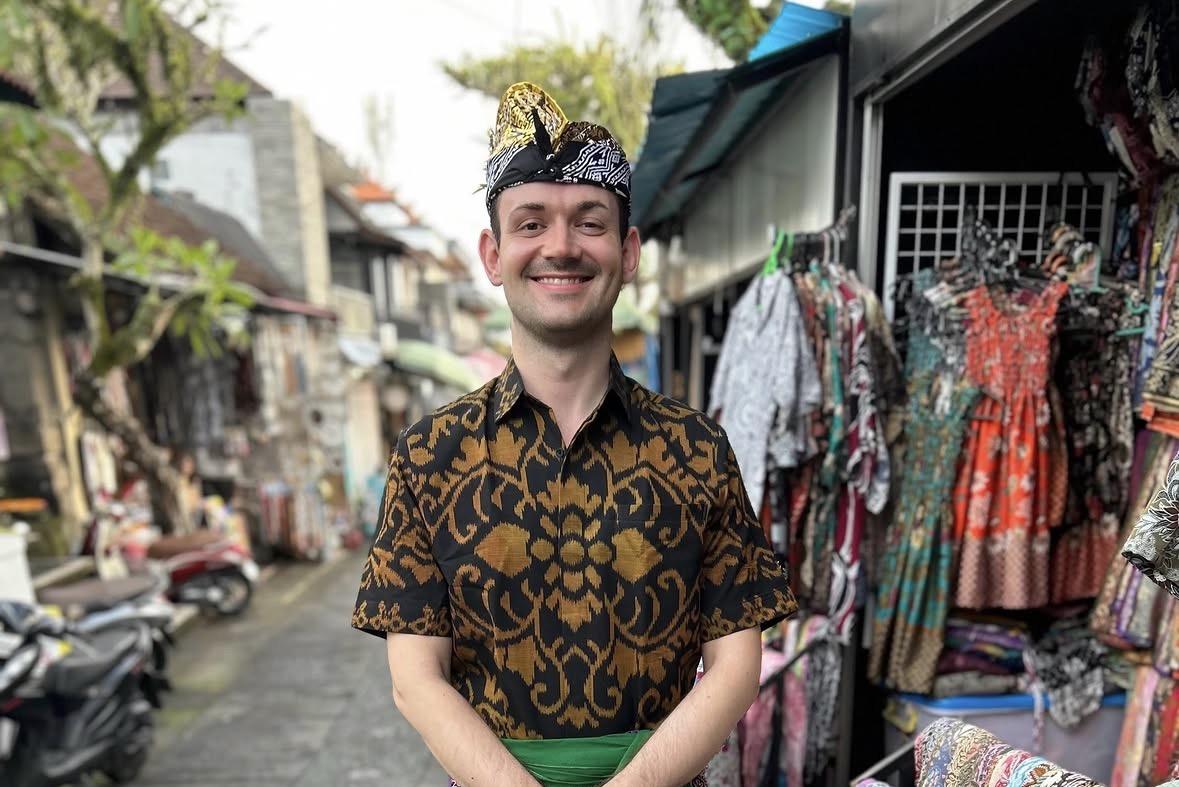
A new chapter begins in Bali! Oliver on his first orientation day with Bali Internships, ready to begin his 12-week professional experience in Indonesia.
An Interdisciplinary Background, an Unexpected Industry
Originally from Germany, Oliver studies German-Dutch Studies at the University of Münster and has also participated in an Erasmus exchange at Vrije Universiteit Amsterdam. His academic and international background reflects an interest in languages, cross-cultural communication, and working across different national contexts.
His previous experience in event coordination, hospitality, and technical project support also gave him practical skills that could be applied across industries. When he began exploring internship opportunities abroad, Bali offered an unfamiliar professional and cultural environment. It would be his first time in Asia and his first extended internship outside Europe.
"I was looking forward to coming to Bali because it was my first time in Asia," he explained.
After discovering Bali Internships through Google, Oliver began the application process in February and arrived in April 2026.
"It was a very spontaneous decision to come to Bali," he recalled. "The process was very good. The visa was all organized for me." His placement at a Bali-based waste management company, from April to July, introduced him to an industry increasingly relevant to tourism destinations: waste management.
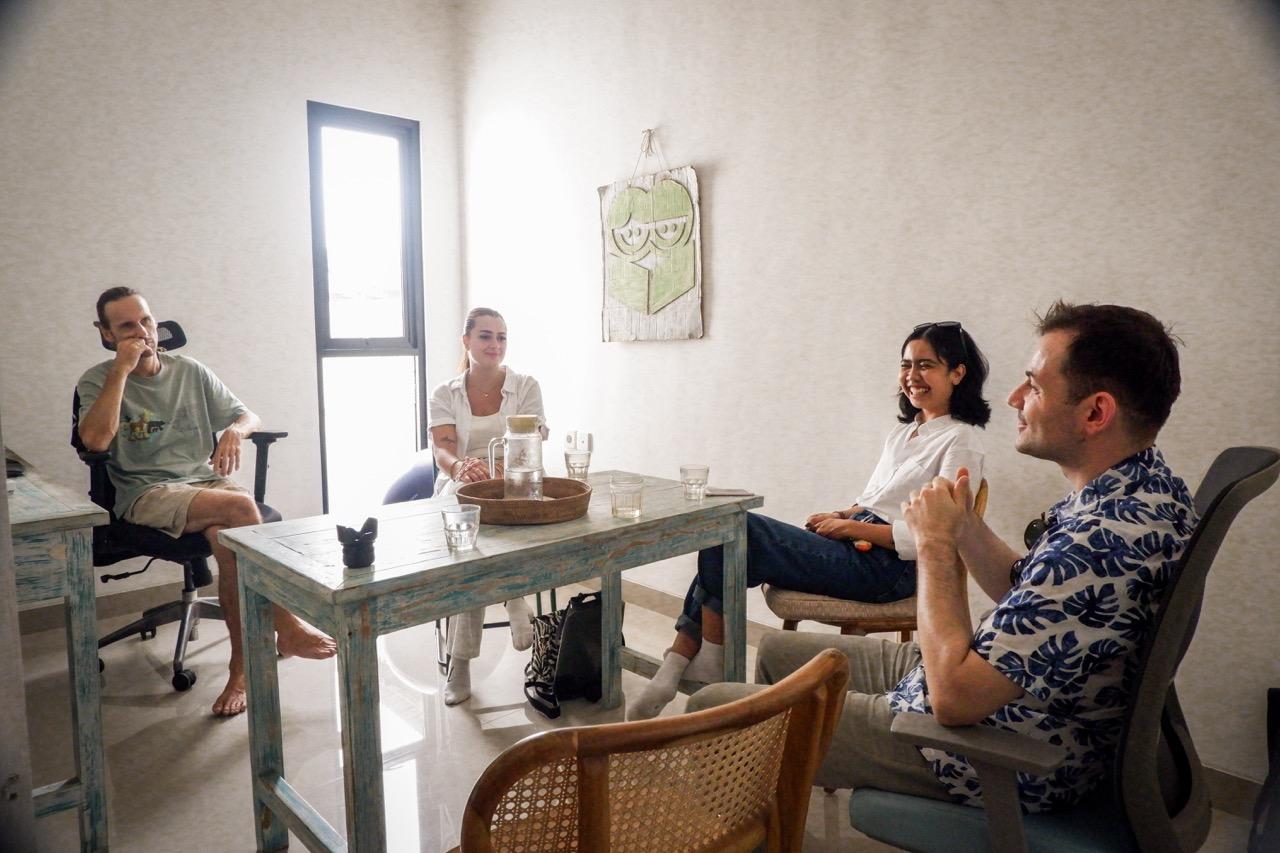
Getting to know the workplace. Oliver meeting the founder and a fellow intern during his introduction day, learning about the organization's mission, vision, and approach to waste management in Bali.
Waste Management, Tourism, and the Business of Sustainability
Bali's tourism economy depends heavily on hotels, restaurants, and hospitality businesses. These industries also generate waste that requires collection, processing, and responsible management. For organizations operating in the waste management sector, environmental objectives must be supported by practical business operations. Building relationships with commercial clients, communicating services, and developing partnerships are therefore important parts of the work.
Oliver's responsibilities centered on precisely these activities. "I went to hotels, I went to restaurants, and I talked to them, especially to the managers or the owners, to cooperate with us." His work involved identifying potential clients, introducing the company's services, maintaining communication, and following up on opportunities for cooperation. Although his degree was not specifically related to environmental science, his communication skills and international perspective were directly relevant to the placement. This is an important distinction for students considering internships outside their immediate field of study. Sustainability-related industries do not employ only environmental scientists or engineers. They also depend on people working in business development, communications, administration, technology, and client relations.
Oliver's internship combined independent work with regular communication and guidance from his supervisor. His working arrangements were flexible, allowing him to complete certain responsibilities remotely while visiting prospective clients in person. Regular online meetings helped him review progress, discuss priorities, and identify areas for improvement. One of his more demanding assignments involved exploring the development of an artificial intelligence tool for the company.
"I never worked with AI," Oliver explained. "It was a tough phase because we both didn't know exactly where we could start." The assignment introduced him to technical challenges outside his previous experience. Rather than presenting every responsibility as an immediate success, Oliver acknowledged the difficulty of working on a project without a software engineering background. His experience highlights an often-overlooked aspect of internships: professional development does not always follow a predictable path.
Learning to recognize one's limitations, communicate difficulties, and explore alternative ways to contribute can be as valuable as completing a familiar task. For Oliver, direct client engagement ultimately became one of the most rewarding parts of his placement. "Meeting new people, definitely. I love to be in contact with other people, with other cultures." He also valued his relationship with his supervisor, whose guidance gave him opportunities to explore unfamiliar responsibilities while developing greater independence.
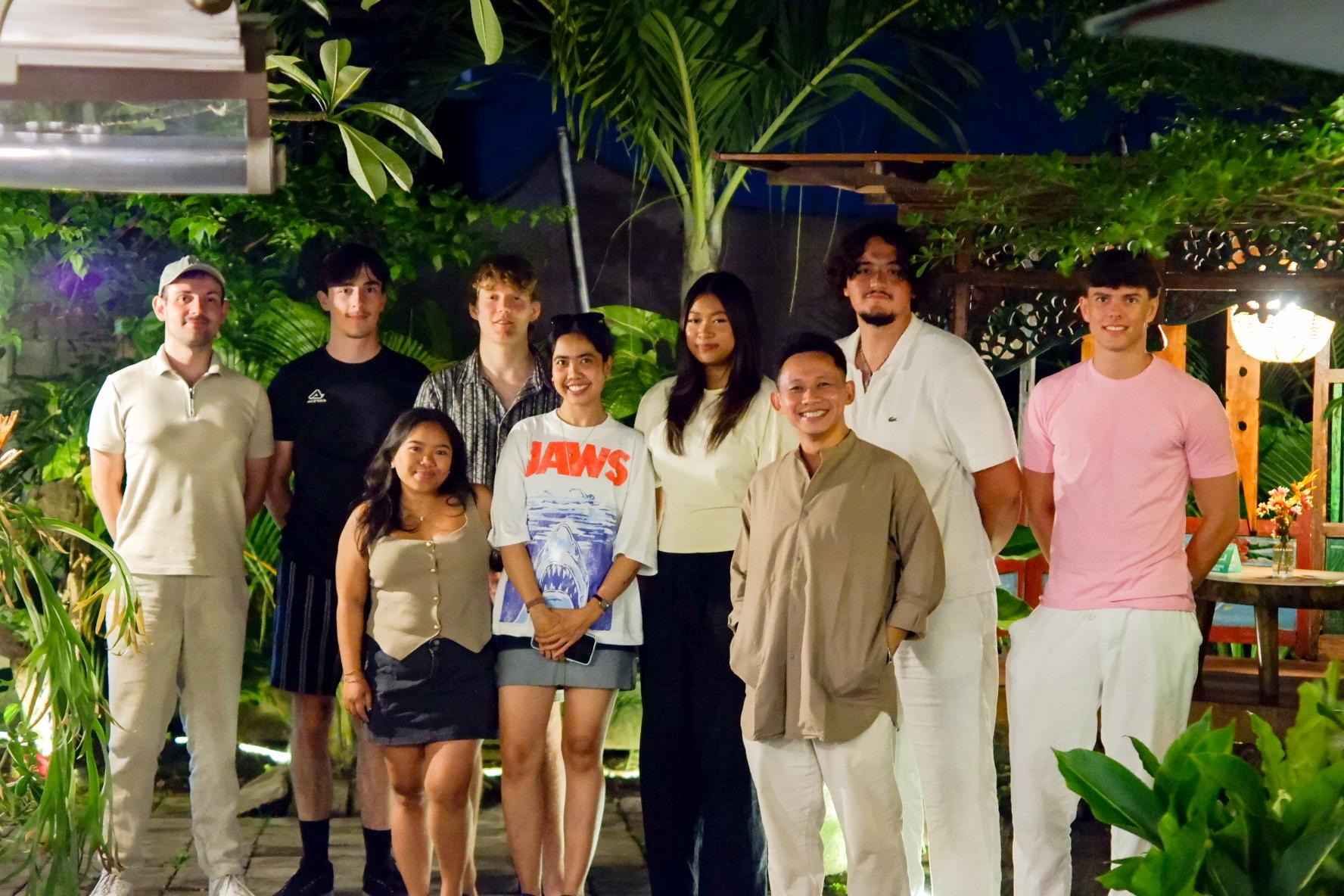
Connections that extend beyond the workplace. At our Bali Internships Gathering, international interns from different academic and cultural backgrounds come together to exchange experiences, build professional networks, and form friendships that may last long after their internships end.
From Academic Specialization to Transferable Skills
Oliver's experience raises a wider question about the relationship between university education and employability. Students studying languages, cultural studies, international relations, humanities, or other interdisciplinary subjects sometimes assume their internship opportunities must remain within a narrow selection of professions. In practice, employers across many industries require the ability to communicate effectively, manage relationships, understand cultural differences, organize work, and adapt to changing circumstances.
Oliver's German-Dutch Studies background provided a foundation for working across cultural and linguistic contexts. His internship allowed him to apply those capabilities in commercial situations, while gaining exposure to environmental services and Bali's hospitality industry. When asked what he had gained professionally, his answer was straightforward: "Everything, from confidence to having fun in the work that I've done." The experience also influenced how he imagined his future career.
"I actually think about coming back here again to Bali, maybe to work here as a full-time job in tourism or waste management, or something in that field." His interests were no longer limited to the professional paths he had considered before arriving.
Bali Internships gathering in Warung Nads, Umalas, Bali, Indonesia. Where all Bali Internships clients, students, volunteers and interns are invited to meet, connect and have a lovely dinner together. One of the most anticipated times for everyone to meet up especially for those who travels alone.
Living and Working Across Cultures
Outside his internship, Oliver spent his weekends exploring different parts of Bali, including Ubud, Kintamani, Sanur, Uluwatu, Nusa Dua, and Mount Batur. These experiences complemented his professional responsibilities by introducing him to different communities, landscapes, and social environments. For a student whose academic interests include intercultural relations, living in Indonesia provided another context for understanding how people communicate and interact across cultures.
His experience also demonstrated that intercultural competence develops through everyday encounters, not only through formal academic study. By the end of his internship, Oliver had gained experience in client relations, business development, workplace communication, and unfamiliar technical assignments, alongside a growing interest in working internationally.
Oliver's placement demonstrates why internship matching should begin with understanding the student rather than relying exclusively on a degree title.
A student of German-Dutch Studies may find relevant experience in tourism, hospitality, international business, sustainability, communications, or other industries where language skills and intercultural competence have practical applications.
At Bali Internships, we work with students from diverse academic backgrounds to identify opportunities that connect their existing skills, professional interests, and learning objectives with the needs of organizations in Bali.
An internship does not necessarily need to follow the most obvious career path associated with a degree. Sometimes, its greatest educational value comes from discovering where those skills can be applied in an entirely different professional environment.
For Oliver, three months in Bali introduced him to waste management, strengthened his professional confidence, and expanded his understanding of where his academic background might take him. And when asked to describe Bali in three words, his answer was simple:
"Always love Bali."
By LK